The Middle Yellowstone River Valley
Summary
Few places better evoke a sense of the great outdoors and abundant wildlife populations than the Middle Yellowstone River Valley. Located between the Montana towns of Bozeman and Billings, and framed by the Beartooth Mountains to the south and the Gallatin Range to the west, this storied region has been a dream hunting and fishing destination for generations of Americans.
Unfortunately, the heritage of exceptional fishing and hunting is being threatened by poorly planned oil and gas development. Stillwater County, home to the Stillwater River, Rosebud Creek and the Yellowstone River, could host up to 700 coalbed methane wells and up to 100 conventional natural gas wells in the coming years, according to the Bureau of Land Management (BLM). In addition, the Montana Department of Natural Resources and Conservation has proposed leasing nearly every single tract of land the agency manages for oil and gas extraction, including parcels along the bed of the Yellowstone River and along Blue Ribbon stretches of the Boulder and Yellowstone rivers.
Perhaps the greatest challenge facing this region is the mixed land ownership, which includes the U.S. Forest Service, the BLM, and state and private landowners and whose lands sit on top of federally owned minerals. Wildlife conservation agreements vary widely between these jurisdictions. For instance, the Butte field office of the BLM recommends that lands near cutthroat streams and Blue Ribbon Fisheries be protected by a half-mile buffer where no surface disturbances are allowed. Yet the Billings field office, which manages most of the Middle Yellowstone country, does not require any buffer whatsoever.
What’s at Risk?
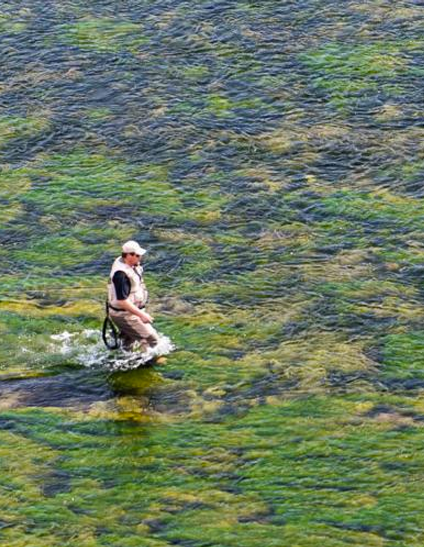
Streams in this part of Montana offer exceptional recreational fishing and are a stronghold for Yellowstone cutthroat trout. Numerous streams contain conservation populations that are critically important for the continued survival and conservation of this species.
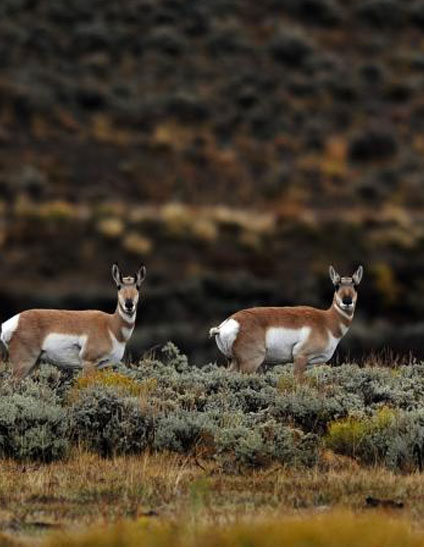
The Middle Yellowstone area also is renowned for big-game and bird hunting. Hunting opportunities abound in the Gallatin and Custer national forests, and deer, elk, upland bird and waterfowl hunters can choose among a multitude of excellent locations at lower elevations.
The Sportsmen’s Solution
Without a coordinated conservation plan that reflects comments from all relevant stakeholders, securing long-term conservation of game and fish populations in the region will be impossible. Landowners and agencies charged with managing these areas must develop conservation plans that ensure consistent resource protections regardless of which agency presides over a specific well pad, road, or waste water pit. Furthermore, this plan must take into consideration the entire landscape of the valley and, at a minimum, be consistent with or stronger than the plans and objectives of state wildlife agencies. Specifically, these plans should establish a minimum half-mile, no-development buffer for all cutthroat trout and Blue Ribbon fisheries, as well as much larger buffers for wildlife winter range and crucial sage-grouse habitats.
Sportsman in the Spotlight
Mike Willett
Mike Willett is one of many sportsmen who know firsthand the importance of this region’s natural heritage. In the summer of 2003, Willett spent 32 consecutive days fishing the Stillwater River. Willett’s family lives nearby in the small town of Fishtail, Mont., and every day that summer he took his fly rod and waded the Stillwater. Spending that much time on a stream not only makes you a pretty good angler, it makes the stream become a part of you.
“Drilling wells along the Stillwater would be a travesty. This is a sacred place that deserves to be kept just the way that it is.” –Mike Willett
Next: The Powder River Basin