Home » Media Center » Featured Reports » Hunting and Fishing Imperiled » Utah » Here

Book Cliffs

Summary

Stretching more than 200 miles from Price, Utah, to Palisade, Colo., the Book Cliffs encompass the longest continuous escarpment in the world and are considered one of the greatest big-game hunting areas on earth.

Primarily public lands administered by the Bureau of Land Management (BLM), the Book Cliffs are a popular backcountry hunting destination with a limited number of licenses are available to hunt the area’s trophy-class elk and mule deer. The BLM has described Gray Canyon in the Book Cliffs area as “a place where a visitor can experience true solitude – where the forces of Nature continue to shape the colorful, rugged landscape.”

Part of the Uinta Basin, the Book Cliffs area is thought to contain large quantities of natural gas and includes the nation’s strategic oil shale reserve. Much of the region already has been leased for energy development in a disjointed fashion without the rigorous planning needed to ensure development is done right. During the next 15 years, the BLM estimates 7,800 new natural gas wells will be drilled in the Vernal and Price areas alone. Much of this development will occur in crucial mule deer, elk, bison, and bighorn sheep summer and winter range and migration routes and will result in an untidy maze of roads, pipelines and wells. If and when the strategic oil shale reserve is opened for development, a whole new level of threats will arise.

The BLM is proposing a 45-mile highway through the heart of the Book Cliffs and crucial deer winter range to accommodate accelerated natural gas development. This proposed road would cut off an important big-game migration route and, according to state projections, could result in a 20-percent reduction in the Book Cliffs mule deer herd.

If crucial big-game summer and winter range are fragmented by roads and drill-rig traffic, sportsmen could lose one of the last, great backcountry hunting destinations in the West. In just a decade, the legendary trophy bucks and bulls of the Book Cliffs could become a memory, and the backcountry hunting that has been enjoyed for generations could be reduced to a maze of roads. Not only will the millions of dollars invested in fish and wildlife recovery in the Book Cliffs be lost, so will the opportunities to enjoy this great Western hunting destination.

What’s at Risk?

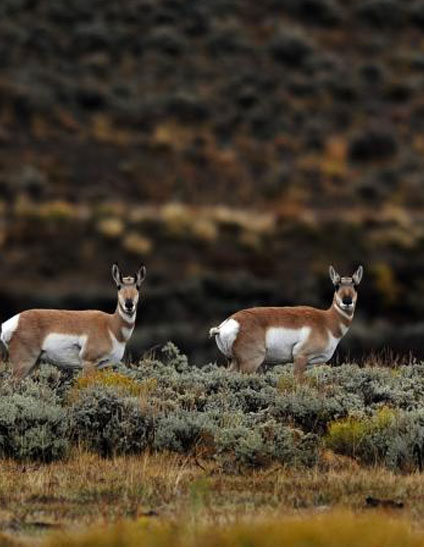
This important sportsmen’s recreation area is home to mule deer, elk, bighorn sheep, bison, pronghorn antelope and native trout. Utahans know that the Book Cliffs offer some of the best hunting and fishing in the state, if not the nation. The Utah Division of Wildlife Resources has spent millions of sportsmen-generated dollars to restore populations of Rocky Mountain bighorn sheep, Colorado River cutthroat trout and American bison on the Book Cliffs. The state agency’s long-term plan is to facilitate increased sportsmen opportunity to pursue these important big-game animals, yet projected and proposed developments threaten current opportunities for sportsmen to pursue game.

The Sportsmen’s Solution

Ultimately, unless the BLM begins incorporating a more comprehensive approach to development, the great mule deer and elk herds of the Book Cliffs could fade away and recovery efforts for bison and bighorn sheep could be stymied. If energy development is planned to address the needs of fish and wildlife, however, we can maintain many of the important values of this treasured hunting destination.  Phased development will help maintain the important summer range, migration corridors, and winter range of the Book Cliffs. Impacts to wildlife need to be monitored and adaptive management needs to take place to prevent wildlife populations from falling below predetermined thresholds.

Sportsman in the Spotlight

Clay Hamann

A Utah native, Clay Hamann has hunted and fished all over the West, but prefers to hunt the Book Cliffs of eastern Utah. Clay has been fortunate to hunt for trophy elk and trophy mule deer in this pristine area, and he recognizes the Book Cliffs as one of the last best places to find large deer and elk. He has served on the northeastern regional committee for the Utah Department of Wildlife Services for 10 years as well as the Uintah Basin Chapter of the Rocky Mountain Elk Foundation banquet committee. Clay has been instrumental in raising funds for wildlife in the Book Cliffs and he wants to see the area remain a place where wildlife thrive and future generations can hunt.

"Long after the energy resources have been depleted, the Book Cliffs must remain a viable area for wildlife. Proper planning is the key." - Clay Hamann

Prev: Uinta National Forest

First Name*

Last Name*

Email*

Title

Company or Organization

My Business or Organization Officially Endorses the Sportsmen's Bill of Rights

Street 1*

Street 2

City*

State*

Zip Code*

Do you have a comment or suggestion?

Items marked with an *asterisk are required.

×