Otera Mesa
Summary
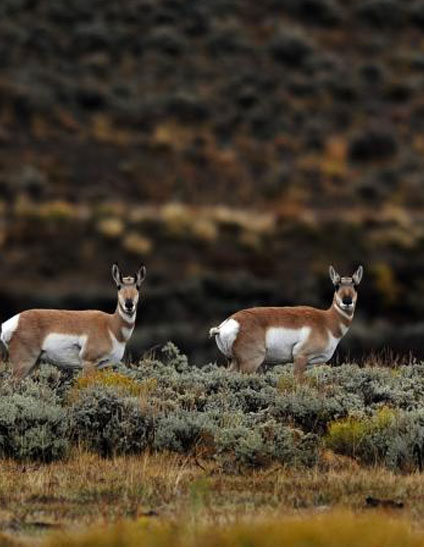
Otera Mesa, New Mexico.In a remote area of southern New Mexico, south of the Sacramento Mountains and east of the Guadalupe Mountains, lies a majestic desert grassland known as Otero Mesa. This vast 2,400- square-mile area contains 1.2 million acres of public land overseen by the Bureau of Land Management (BLM). Roughly half of the area is covered by grassland, including the largest remaining tract of black grama grass in North America’s Chihuahuan Desert. In addition to breathtaking landscapes, Otero Mesa features New Mexico's only remaining native pronghorn antelope herds, a healthy mule deer population, a complex ecosystem full of native plants and more than 1,000 species of wildlife, including the rare Aplomado falcon.
Hidden below Otero Mesa’s grassland is a large reserve of groundwater known as the Salt Basin. In an area already adversely affected by years of drought, protecting one of New Mexico's last uncontaminated aquifers is critical to the people of New Mexico.
Despite its natural beauty and unique hunting opportunities, Otero Mesa is in danger of becoming an industrial oil and gas field. The BLM has acknowledged that the chances of finding economically recoverable amounts of oil and gas in this area are slim, yet agency officials recently gave a green light to energy development throughout the region. Meanwhile, the oil and gas industry has asked that 250,000 acres be opened to leasing in Otero and Sierra counties. During the last 40 years, oil and gas development in nearby Eddy County has significantly fragmented habitat and affected wildlife migration and activity patterns. In some areas of Eddy County, oil and gas wells are spaced fewer than 10 acres apart.
The BLM’s plan fails to include adequate protections for wildlife, grassland restoration and water resource protection. Recent scientific studies clearly show that restoration or reclamation of the predominant black grama grasslands is unrealistic and not viable for the diverse flora and fauna of this fragile ecosystem. Surface disturbance, road building, and habitat fragmentation will imperil populations of trophy pronghorn and significantly disrupt the balance of other critical wildlife and plant species.
What’s at Risk?
The BLM’s current plan allows drilling on 95 percent of Otero Mesa. If development is allowed, the impacts will be disastrous for the ecosystem and the water beneath this desert landscape. The Salt Basin’s shallow fresh water aquifers are highly vulnerable to contamination from oil and gas development. Drilling will have to go through one of New Mexico’s largest untapped fresh groundwater basins, which is critical to the region. Inevitable spills, produced water leaks and chemical-laden fracturing fluids threaten to penetrate the underlying aquifers and contaminate the water.
Although a 2009 federal court decision invalidated the BLM's drilling proposal for Otero Mesa, requiring a more thorough environmental impact assessment, sportsmen are still faced with the threat of losing this invaluable landscape for just a few day's worth of gas.
The Sportsmen’s Solution
Because the Salt Basin is an extremely important source of the region’s water and vulnerable to contamination, a broad coalition, including New Mexico’s governor, members of its congressional delegation, neighboring cities and counties as well as sportsmen, is supporting a moratorium on drilling until a comprehensive study of the Salt Basin aquifers is completed. To conserve the last stronghold of the Chihuahuan Desert grassland, a citizen’s proposal was submitted to the BLM to designate 583,837 acres of the mesa as an “area of critical environmental concern.” The best solution to protect Otero Mesa’s fragile ecosystem and its critical water resource is to help pass congressional legislation that eliminates mineral development, including oil and gas, from this magnificent area.
Sportsman in the Spotlight
Rick Simpson
Rick SimpsonRick Simpson is a native New Mexican who grew up hunting and exploring Otero Mesa. As owner of S-S Outfitters in Glencoe and a former county commissioner from southern New Mexico, Rick has seen how irresponsible energy development in southeast New Mexico has transformed vast tracts of desert shrub and grassland into an industrial wasteland. During the past five years, Rick has been a champion for responsible energy development and the protection of Otero Mesa’s fragile habitat, wildlife and invaluable water resources.
"For sportsmen in this area, Otero Mesa is worth much more as a place for future generations to hunt than it ever will be for energy development." - Rick Simpson
Next: San Juan Mountain Ecosystem and HD Mountains